
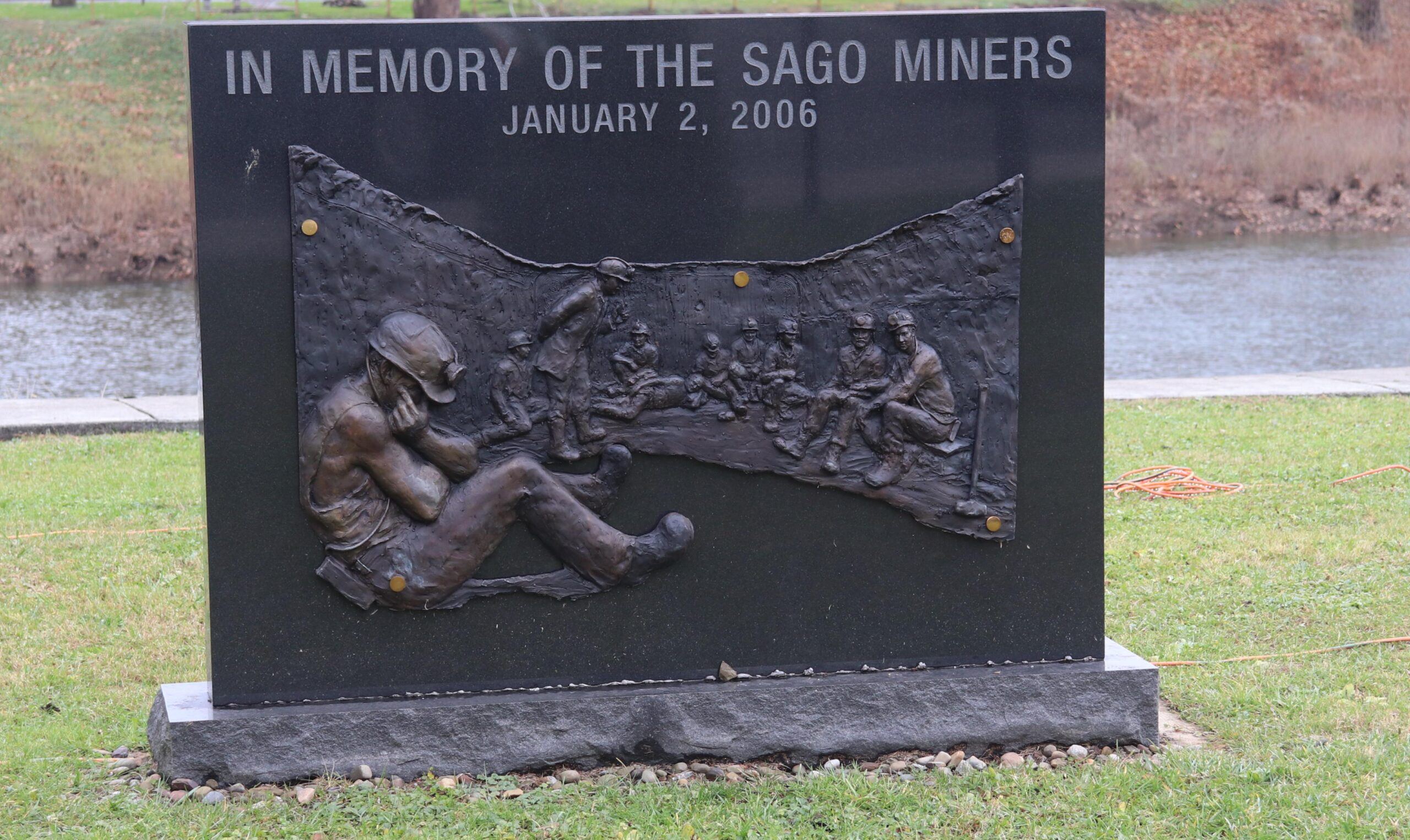
Today marks the 20th anniversary of the Sago mine disaster.
On January 2, 2006, an explosion in West Virginia’s Sago mine trapped 13 miners underground and catapulted mine safety into the nation’s consciousness like no other workplace disaster in decades. The explosion killed one miner instantly, 12 others were trapped underground for nearly three days. One miner survived, but a lack of oxygen claimed the rest.
Rescuers pulled Randal McCloy Jr. out of the mine on Jan. 4. McCoy spent weeks in a coma and received treatment for severe brain injuries.
Officials identified the victims as Tom Anderson; Jerry Lee Groves; James Bennett; George Junior Hamner; Marty Bennett; Terry Helms; Jesse L. Jones; Fred G. Ware Jr.; David Lewis; Jackie Weaver; Martin Toler Jr. and Marshall Winans.
Two weeks later, a fire broke out in the Aracoma mine in West Virginia, followed by the death of 5 miners in May in an explosion the Darby mine in Harlan County Kentucky. 47 coal miner were killed in 2006, a ten year high and more than twice as many as the previous year. (Only 8 coal miners were killed in 2025, with less than half as many coal miners working today as in 2006.)
Increased mine activity (as a result of higher energy prices), neglected maintenance, crumbling infrastructure and insufficient training, faulty respirators, poor communication between miners and the surface all contributed to the tragedies.
But more important, the coal mine disasters of ’06 revealed the Bush administration’s abdication of its responsibility to ensure safe workplaces for this nation’s miners. Investigations by aggressive reporters like the Charleston Gazette’s Ken Ward showed how the Bush administration filled MSHA with industry insiders, deep-sixed numerous regulations that would have prevented or reduced the consequences of the mine accidents, cut the number of mine inspectors, failed to cite safety violations and failed to collect fines from those mining companies that were cited. The mining tragedies of 2006 revealed to Americans the human toll of the Bush administration’s close ties to the industries it was supposed to regulate.
Following the Sago and Aracoma mine deaths, Congress was no longer able to deny that the Emperor was as naked as a jaybird and overwhelmingly passed the MINER Act in record time. The Miner Act passed the Senate unanimously and passed 381 – 37 in the House of Representatives.
New mine safety laws were also passed in West Virginia and Kentucky.
The new federal and state laws doubled to two hours the amount of emergency air supplies miners must have with them at work and required mines to store extra air packs underground. Other changes mandated more rescue teams and ordered mines to install high-tech communications and tracking devices and emergency shelters to help trapped miners survive, among other things.
The Miner Act also created the Brookwood-Sago mine safety grant program for emergency response and preparedness training. Over $75 million has been awarded through the program.
But in honor of the 20th anniversary of the disaster, Trump is proposing to eliminate the program
These days it’s hard to imagine any new worker safety law being passed, much less passed by an overwhelming majority in the Senate and House of Representatives. And as we’ve seen by the decimation of NIOSH and the failure of the Trump administration to enforce the new MSHA silica standard, Republicans care little for the lives of American coal miners.
Other Sago Anniversary Articles
Sago Mine Disaster’s Aftershocks Still Reverberate, 20 Years Later, The Wheeling Intelligencer
West Virginia remembers 12 miners lost 20 years ago in Sago Mine disaster, West Virginia Metro News
Sago Mine Disaster 20 Years Later: Mining tragedy’s effects still linger, Parkersburg News and Sentinel
Remembering the lives lost in the Sago Mine Disaster 20 years later, WOWK
Another provision of the MINER Act sabotaged by the Trump Administration is the elimination of all staff in the NIOSH Office of Mine Safety and Health Research (Pittsburgh and Spokane Labs), even though the MINER Act “permanently established within the Institute (NIOSH) an Office of Mine Safety and Health.” It mission is to “enhance the development of new mine safety technology and technological applications” and “shall be responsible for research, development, and testing of new technologies and equipment designed to enhance mine safety and health.”
For example, NIOSH developed the personal coal dust exposure monitor (CPDM) (now required under MSHA’s 2014 respirable dust rule), as well as a coal dust explosibility meter which provide immediate feedback to operators on whether rock dust is adequate to prevent coal dust explosions (without waiting for days for outside laboratory results).
A recent NIOSH innovation is the end-of-shift silica exposure monitoring technology, which would eliminate the need for operators to ship silica dust samples to outside labs and instead give immediate information on overexposures which could lead to timely changes in exposure levels and inform miners of unsafe conditions. While MSHA was urged and chose to reject mandating this technology as part of the now frozen silica rule, use of this device is so cost effective that mine operators would quickly recoup their investment compared with shipping samples to outside labs.
While Trump has proclaimed himself a friend of coal, that friendship evidently ends when it comes to the health and safety of the miners who produce the coal he so dearly loves.