
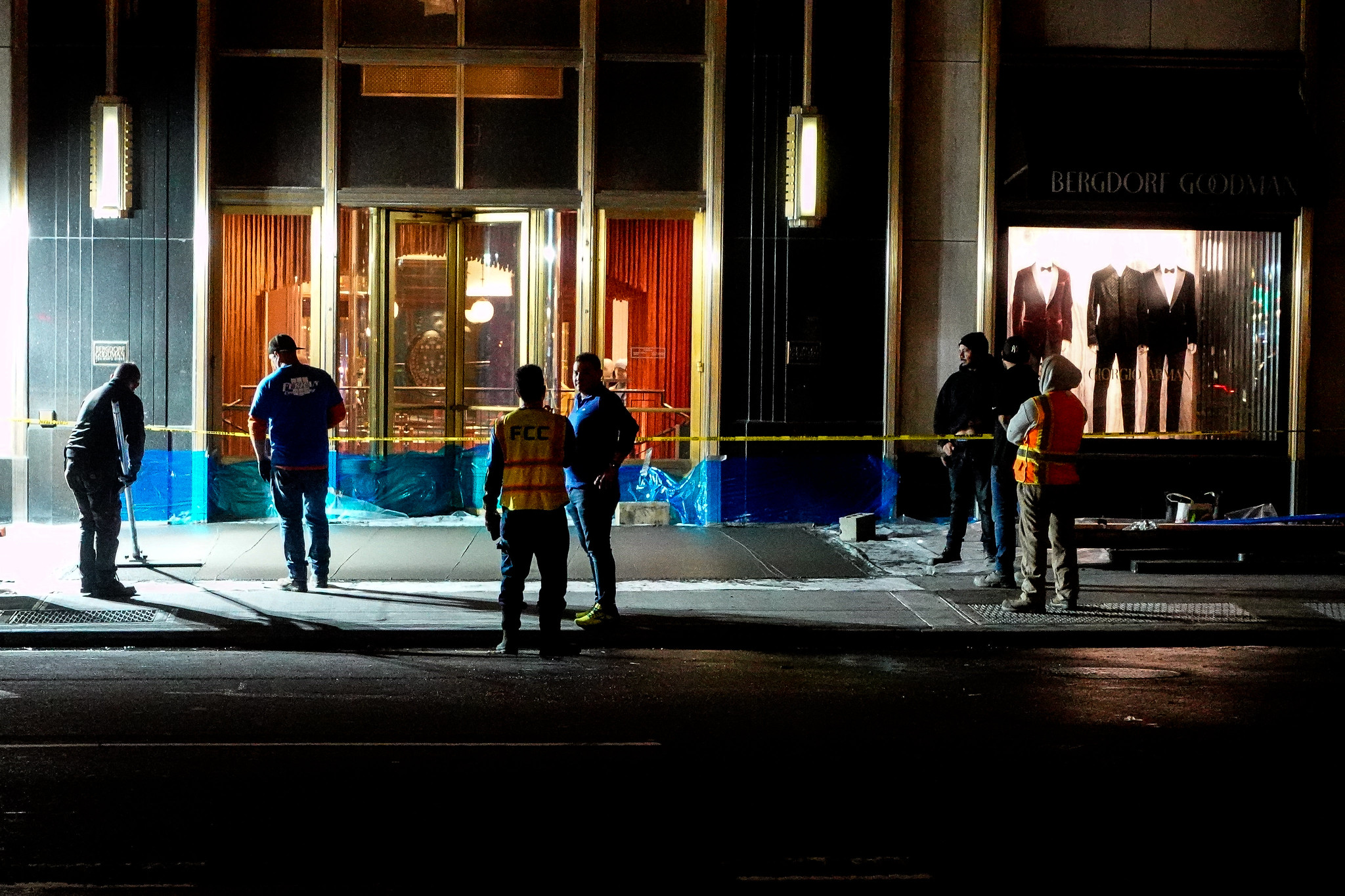
Ah, the hopeful dawn of a new year!
This is a time when we look back fondly at the events of the past year and how things have changed since since the dawn of 2025.
We began 2025 apprehensive about a second Trump administration. We ended 2025 shocked by how naive we had been.
The progress of gained in the New Deal and Great Society are disappearing and we’ve moved much closer to the goal Steve Bannon announced at the dawn of the first Trump administration: “deconstructing the administrative state.”
That translates into eliminating federal protections for workers, consumers or the environment, and returning to those hallowed days of survival of the fittest.
And working people are on the front line of Trump’s attacks on the federal government.
Now I’m mostly just looking at the macro, mainly political, administrative and regulatory issues. But for tens of thousands of people across the country, there was really only one top story of the past year – the senseless loss of a husband or wife, daughter, son, father or mother, brother or sister, friend or co-worker.
Which is why we’re here.
But enough rhetoric. Lets get to the gory details.
1. Donny and Elon
Remember those innocent days where we were apprehensive about how a second Trump administration would behave, but confident that our Constitutional and legal protections would stand firm?
When those of us who knew how government really works chuckled when Trump first offered Elon the so-called Department of Government Efficiency, (nicknamed DOGE after Elon Musk’s Dogecoin.) Only Congress can create departments, we knew, and the Senate would never have 60 votes to do that. We hoped that Project 2025 would be lost on some dusty bookshelf.
Remember when we smiled knowingly at the futility of attempting mass firings of government workers who had civil service and union protections? How we shook our heads at threats to fire the Chairpersons and board members of independent agencies established by Congress, like the NLRB? And rolled our eyes at threats to eliminate entire federal agencies without Congressional approval?
I recall how we shook our heads at the Trump administration’s vows to rescind or not spend funding that was authorized by Congress and looked forward to the courts throwing all of the attempted sabotage back in Trump’s face.
How we believed that we would never see in the United States masked thugs in combat gear snatching up undocumented immigrants (and American citizens) with brown skin and transporting them to brutal prisons in other countries without even the pretense of due process?
Some of us even believed that there were still Republican politicians with backbones and scruples, only to face the reality of a Congress controlled by impotent Trump groupies and the spineless cult once known as the Republican party.
Look who’s laughing now.
I’m sure there are lessons to be learned from all of this: the real weakness of our institutions, the fecklessness of those who once believed in our system of government, but fear losing office even more. And …..?
And what was accomplished by firing a quarter of a million federal workers, abolishing entire programs, undermining our rights and sentencing millions in this country and abroad to preventable illness and death?
Saving money? Rooting out waste, fraud and abuse? Promoting efficiency?
None of the above. Even conservative think tanks can see the truth.
“A lot of the spending reductions that I’ve observed coming from the administration have been less focused on cutting big budget items and more on reorienting government funding based on ideological or different cultural priorities,” according to Romina Boccia, the director of budget and entitlement policy at the libertarian Cato Institute.
Of course it’s not all dismal. Progressives and advocates have been fighting back with some success — on the streets, in the courts and at the ballot boxes.
2. New DOL “Leadership “
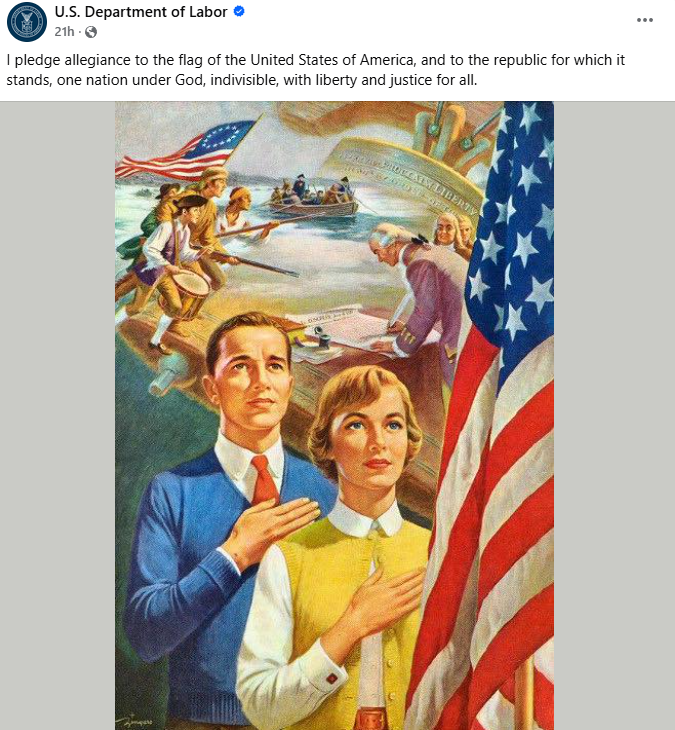 First, the good news: The Department of Labor building is still named after Frances Perkins and not Donald Trump, Andrew Carnegie or Cornelius Vanderbilt. So there’s that.
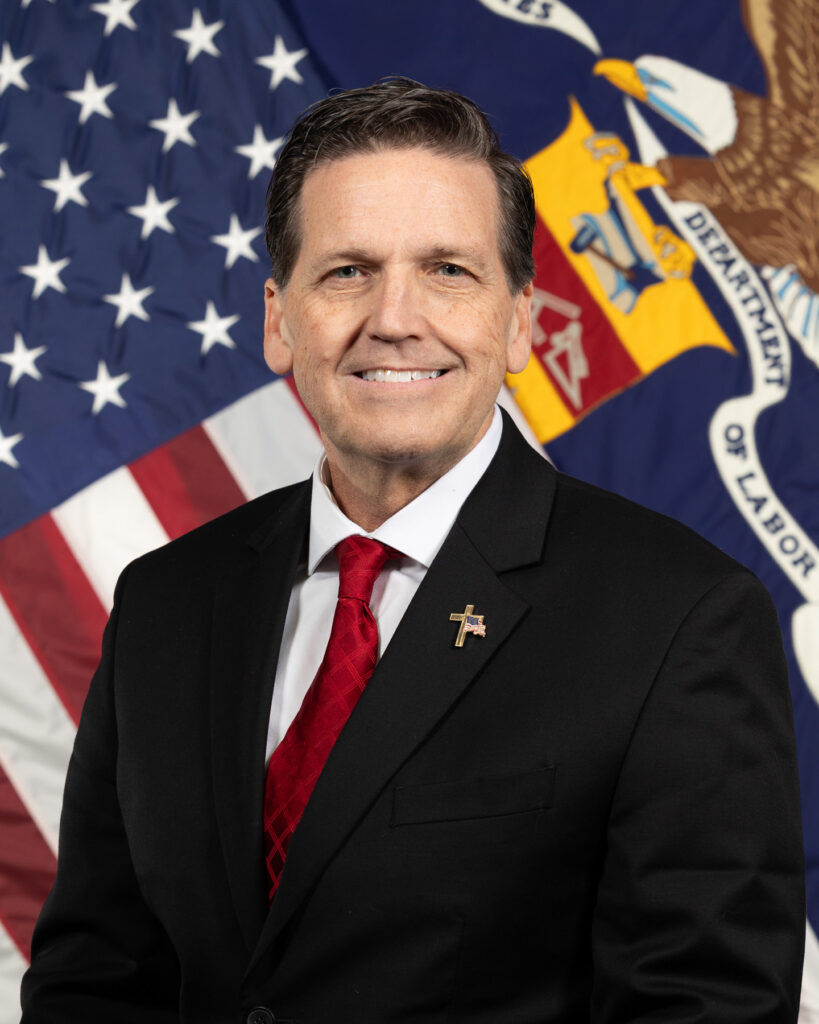
Former Oregon Congresswoman Lori Chavez-DeRemer was installed as Secretary of Labor with high hopes and some union (Teamsters) support. Chavez-DeRemer had been seen as somewhat of a moderate, labor supporter, but those hopes were quickly crushed as she launched an all-out campaign to transform herself into Trump’s biggest fangirl.
In quick order, DeRemer oversaw the near elimination of the Women’s Bureau, the Bureau of International Affairs (ILAB) and the Office of Federal Contract Compliance Programs. She hung a portrait of Dear Leader on the front of the Department of Labor so huge it would have made Orwell blush.
And breaking the mold of previous Secretaries of Labor who liked to boast about job creation, DeRemer instead bragged about how Trump added over a quarter of a million government employees to the unemployment rolls.
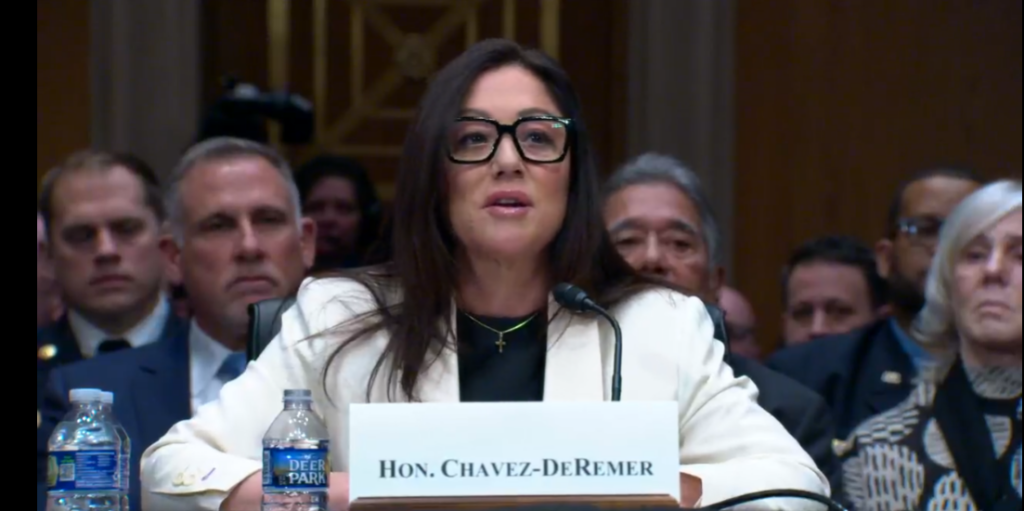
DOL’s public media is attempting a return to a white, 1950s America, but leans more toward Nazi propaganda.
The DOL’s 2025 Accomplishments webpage looks like it came out of the Department of Commerce, not the Department of Labor. It boasts of “Providing Compliance Assistance for Employers,” “Reducing Regulatory Burdens on Businesses,” and rescinding “discriminatory diversity, equity, and inclusion (DEI) requirements,” but says nothing about keeping workers safe, defending workers against racial or gender discrimination or protecting workers from wage theft.
Chavez-DeRemer oversaw some inspiring book burnings at OSHA, removing any documents that contained the word “diversity” (or any combination of those 9 letters), and acquiesced to a White House budget proposal that would see already rare OSHA inspections drop by 30%, decimate OSHA’s standards budget and eliminate the Susan Harwood Worker Training Grant Program.
Her most unique initiative was the Department of Labor’s first-ever prayer service for DOL employees. Lest you think she was just catering to Christians, the session also “included a speech by Yaakov Menken, a right-wing orthodox Jewish rabbi, who during his speech, disparaged gay marriage, transgender people and the fact that people use gender pronouns.” No mention of Kwanza, nor was there any participation by Muslim clerics. DOL employees reported being appalled at the spectacle.
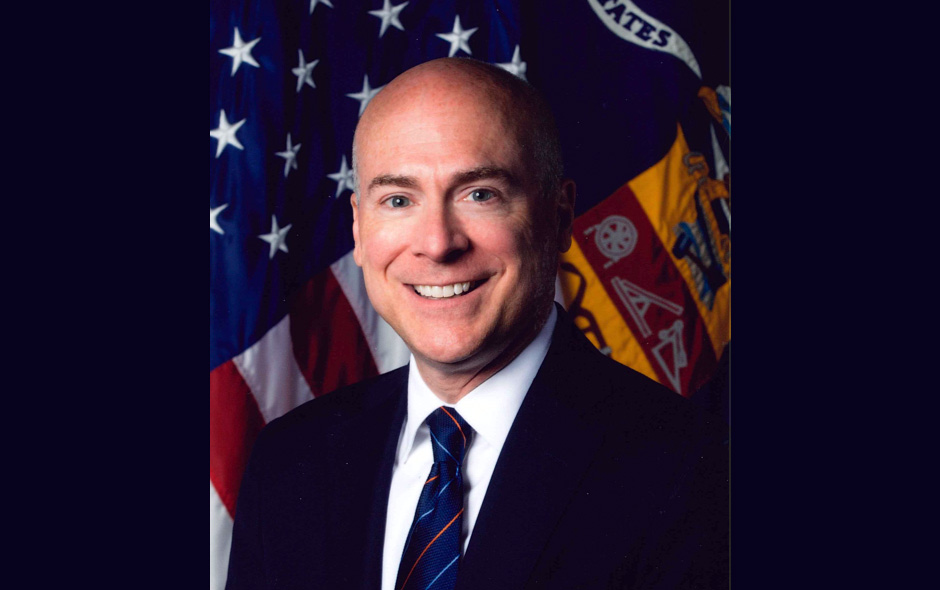
OSHA and MSHA also have new heads, but they only recently took the reins of their agencies, so the jury is still out. David Keeling at OSHA had a rather undistinguished health and safety record at Amazon and UPS. And Wayne Palmer at MSHA was executive vice president at the Essential Minerals Association, which “represents the interests of companies that mine or process minerals that are critical to manufacturing, energy, agriculture, infrastructure, transportation, and technology industries.”
Neither appears to be a MAGA ideologue dedicated to the destruction of the agencies they now head — at least for now. So there’s that.
OSHA continues to issue some large penalties. But this year’s overall enforcement numbers for OSHA or Wage & Hour are not good, as reported by Good Jobs First:
From 2009 through 2024, federal labor enforcement remained fairly steady, with average yearly penalty totals fluctuating only 4%. So far in 2025, combined penalty numbers for the Wage and Hour Division and the Occupational Safety and Health Administration of the U.S Department of Labor are down sharply compared to previous presidential administrations.
Average monthly penalties by presidential administration reveal the following: Wage and hour penalties have decreased 94% during Trump’s second term; and workplace health and safety penalties have dropped 45%.
3. NIOSH Who?
Sometime last March, an 18 year old DOGE Bro shocked Elon with the news that there were three separate agencies in the federal government — OSHA, MSHA and NIOSH — that had the words “safety and health” in their title. Surely at most only two were needed and the third was undoubtedly waste, fraud and abuse… or something…and had to go
So on April 1, DOGE’s willing stooge, DHS Secretary RFK Jr., announced the elimination of the National Institute for Occupational Safety and Health. Sadly, this was no April Fools joke for NIOSH employees and the millions of workers in the construction, mining, healthcare, fishing and pretty much every other occupation whose lives, lungs and limbs depended on the work that NIOSH does..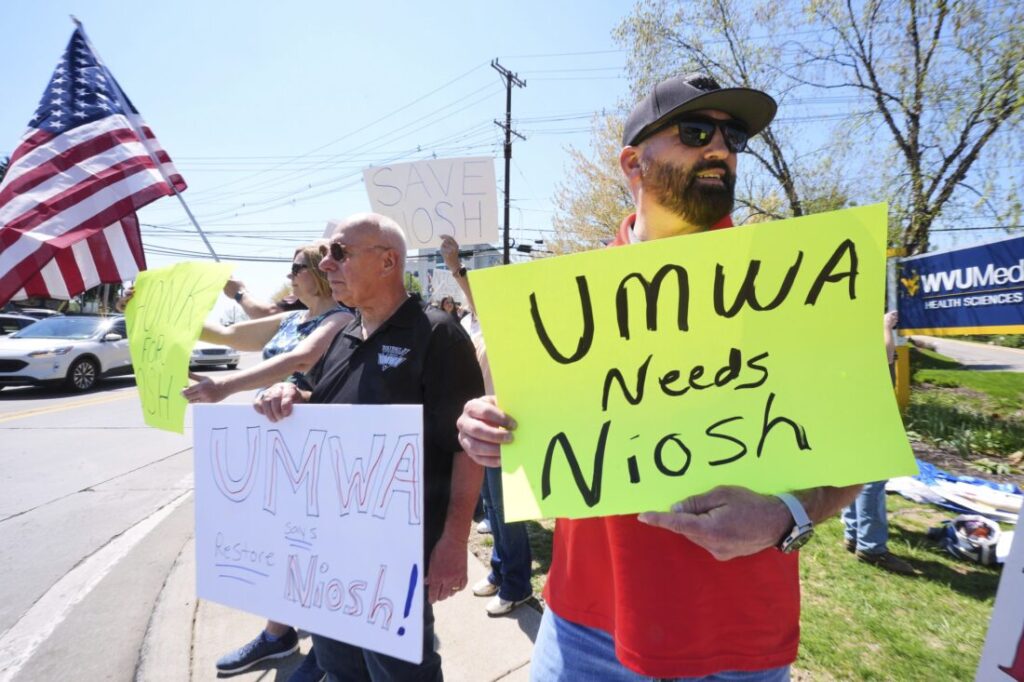
NIOSH is one of the most important workplace safety and health agencies that most people have never heard of. NIOSH conducts research that forms the scientific basis for workplace safety and health standards, monitors and conducts hazard investigations on exposures like asbestos, coal dust, lead and other toxins, develops methods to protect workers against heat, oversees medical examinations for miners, 9/11 responders and nuclear workers during the Cold War, and other workers.
Lost are NIOSH programs that certify respirators and research hazards and solutions for miners, firefighters, farmworkers, and workers in the fishing, construction, oil and gas and many other industries. NIOSH also funds Education and Research Centers that form the pipeline for future occupational safety and health professionals in the U.S. They conduct Health Hazard Evaluations that help employees, unions, and employers learn whether health hazards are present at their workplace and recommends ways to reduce hazards and prevent work-related illness. NIOSH conducts general research, training and the many other programs that the agency conducted to protect workers.
Without NIOSH’s ability to investigate outbreaks and certify respirators, more healthcare workers, firefighters, construction workers and others will get sick and die Sooner or later this country will face another pandemic and, as with COVID, workers will be on the front lines without the benefit of research to protect them. More workers will die of heat-related illness, and more miners will succumb to dust-related illness and other deadly hazards.
Some of NIOSH’s functions have been restored due to lawsuits and Congressional pressure. But generally, it’s chaos. Many NIOSH employees laid off or on administrative leave, and uncertainty about what comes next, even if Congress restores some of the agency’s funding.
Meanwhile, Kennedy lied to CBS News chief medical correspondent Dr. Jon LaPook, claiming that most of the Health and Human Services firings were “DEI cuts” and falsely promised that no important functions were lost; they were just reorganized into other programs. But then he admitted that he was not familiar with the catastrophic cuts at the department he is supposed to be running.
4. Coal May Be King, but Miners are Expendable Serfs
One of the most important accomplishments of the Biden administration was to issue a new silica standard to protect mineworkers — especially younger miners — from rising cases of severe black lung disease.
The new MSHA silica standard cut the exposure limit to the same level that OSHA had issued 8 years earlier to protect construction, foundry and other workers. OSHA’s belated action came more than 50 years after NIOSH told the agencies that the old standard was not protecting workers from silica-related silicosis, black lung and cancer.
Cases of a particularly severe form of silica-related black lung disease, Progressive Massive Fibrosis (PMF), have been rising, particularly among young miners. The CDC estimates that about 20% of coal miners in Central Appalachia are suffering from black lung — the highest rate detected in more than 25 years. One in 20 of the region’s coal miners are living with PMF.
Mine operators were required to start complying with the new silica standard last April.
But in one of the most devastating worker betrayals of the Trump administration, MSHA announced in April that they were delaying enforcement of the standard by four months, then announced another two-month delay.
Trump seems to have forgotten that mining “clean, beautiful coal” requires healthy, living coal miners.
The delay came shortly after the Trump administration devastated NIOSH, ending the agency’s Coal Workers’ Health Surveillance Program studies respiratory diseases in miners related to coal mine dust exposure, as well as killing NIOSH’s Miner Health Program which conducts research, workplace interventions, evaluation, and community engagement in order to eliminate or reduce mining fatalities, injuries, and illnesses. Some of these programs have been partially restored due to worker and union actions, Congressional outrage (even from some Republicans) and court decisions.
Then, as feared, MSHA announced a few weeks ago that it would “reconsider” the Biden rule, with the intention of making changes — likely those requested by mine operators and Congressional Republicans who oppose protecting mineworkers.
Meanwhile, 34 workers under MSHA’s jurisdiction have been killed in 2025 due to fatal injuries on the job. Twenty-eight died last year.
5. Chemical Safety Bored
No one really knows why Donald Trump has a problem with the Chemical Safety Board. Trump tried to eliminate the CSB since his first term in office and this budget year is no exception. Just to add insult to injury, this year Trump forced CSB leadership to issue a hostage video-style budget proposal, admitting to the capital crimes of duplicating substantial capabilities in OSHA or the EPA to investigate chemical-related mishaps. Furthermore, the CSB has allegedly committed the (Congressionally mandated) crime of generating “unprompted” studies of the chemical industry, and recommending policies that they have no authority to create or enforce.
But the CSB is not — and was never intended to be — a regulatory or enforcement agency like OSHA or EPA. Nevertheless, this tiny agency performs a unique (and at $14 million per year, inexpensive) function that no other Federal agency performs: conduct in-depth root cause analyses of major chemical incidents and issue recommendations to federal and state government agencies (like OSHA and EPA), industry associations (like the American Petroleum Institute) and labor unions.
And whereas OSHA and EPA can only look into specific violations of their own existing standards and regulations, the CSB can look at deeper causes that may not be covered by any regulations — things like the impact on plant safety resulting from worker fatigue, tight deadlines, organizational changes, corporate budget cuts, weak regulations or lax oversight.
The whole thing is rather curious as the CSB has significant support in the chemical industry. Even Congress thinks elimination of the CSB is bonkers. The House draft budget proposal provides most of the CSB’s budget and the Senate is proposing to provide the same funding as in 2025. Being as we’re still operating on a continuing resolution, however, we still don’t know if the CSB’s death sentence will be commuted or if heads will roll this time around.
6. State Plans: For Better and Worse
Twenty-one states run their own OSHA programs, and 6 more run public sector only plans that just cover public employees. The Occupational Safety and Health Act requires these plans to be “at least as effective” as the federal program. That means that OSHA state plans are required to adopt all federal OSHA standards (or issue something more effective) and that their enforcement programs must be as effective as federal OSHA’s. The feds review a variety of measures annually, including enforcement targeting programs, enforcement procedures, penalty levels and any complaints from workers or others about how the state program is functioning.
The problem with this arrangement is that federal OSHA must have the political will and the resources to oversee the operation of almost 30 state plans to ensure that they are “at least as effective.” From my experience, it’s like herding cats.
OSHA has never had adequate resources to effectively oversee the effectiveness of the state plans — and they will likely have significantly fewer resources to herd the state plan cats in the coming year. Weak oversite can lead to problems.
For example, thanks to Fortune Magazine, we have recently seen convincing evidence that the Governor of Nevada recently killed OSHA citations against Elon Musk’s Boring Company. Will federal OSHA have the resources or political will to crack down on such influence peddling?
The upside of state plans is that they can be “more effective” than federal OSHA, issuing standards that the feds are unable to issue in any reasonable timeframe. For example, last year Maryland, Washington and Oregon issued strong heat standards, and California issued an indoor heat standard to go along with the already-existing outdoor heat standard. California has standards covering workplace violence and airborne diseases — standards that federal OSHA has yet to issue. And earlier this year, the Maryland legislature passed a bill that not only mandated penalties for public employers who violate the law, but also directed Maryland OSHA to issue a workplace violence standard covering public employees. Facing inaction or rollbacks on the federal level, other states are looking at initiatives to go beyond federal standards to protect their state’s workers.
On the other hand, Nevada OSHA issued a weak, mostly unenforceable heat standard last year. The business community liked the Nevada standard so much that they want the feds to issue something similar.
Arizona, for some unexplainable reason, has decided that something must be done about the hazards of heat, but that “something” seems to be just issuing guidance instead of an enforceable standard.
But with anti-regulatory forces in power in Washington D.C., we are likely to see a lot more action in the states.
7. The Heat is On (Or is it?)

Workers, unions and health & safety advocates were pleasantly surprised last May when Trump’s OSHA decided to go ahead with hearings on the Biden administration’s strong proposal for a standard to protect indoor and outdoor workers against extreme heat.
What was not surprising was industry’s strong opposition to a strong standard.
The construction industry asked to be exempted (or have a separate standard) as did the agriculture industry. Workers working inside should have a different standard than workers working outside. Industry criticized the proposed standard as a “one-size-fits-all rule.” They argued that workers in the south and workers in the north should have different requirements. Hispanic workers are less vulnerable to heat than lighter-skinned workers, according to some industry witnesses. Others even theorized that climate change has caused human beings to evolve recently to become less sensitive to heat.
And they all agreed that instead of a specification standard that specifies how much water, how much rest and how long the acclimatization period, they’d rather have a “performance standard” that would set general guidance, but allow every employer to figure out their own program — similar to Nevada’s deeply flawed heat standard.
Unions, public health and workplace safety advocates presented strong evidence supporting a strong standard that would specify allowable heat thresholds and require employers to provide frequent shade, accessible water, rest, acclimatization, emergency response procedures and training.
Time will tell what will happen next. Either OSHA will issue a strong standard similar to the Biden proposal (highly unlikely), issue a very weak standard, similar to Nevada’s in order to pre-empt a strong standard in the next Democratic administration (possible), or issue nothing (likely, considering this administration’s general hostility to new regulations and lack of OSHA staff to manufacture new evidence and rewrite the proposal.)
8. Empowering Deregulation; Ignoring Workers
Republican Presidents (as well as Republican Congresspersons and Senators) always agree on one thing: cutting “burdensome” regulations that are allegedly stifling the economy and killing jobs.
OSHA has issued deregulatory proposals that would weaken use of the General Duty Clause — mainly for entertainment and sports industries — but leaving open the possibility that use of the General Duty Clause could be expanded to any industry whose employers consider that work to be “inherently risky.”
They are proposing to eliminate standards because the protections they ensure allegedly do not provide significant protection beyond what would exist without the standard. How so? Because certain hazards are so obvious to employers and employees that we don’t need rules requiring them.
(Like we don’t need laws prohibiting drunk driving because it’s obviously dangerous to drive drunk.)
But this administration isn’t just cutting protections for workers. They’ve also decorated their deregulatory actions with flowery nonsensical rhetorical justifications that would be funny if they didn’t have such tragic impacts on worker safety and health, the environment and consumer protections.
They have proposed reducing penalties for small businesses in order to offer employers the “opportunity to comply with regulations.”
They want to expand “voluntary” programs so that OSHA can “meet businesses where they are,” “empower employers” with “clarity and collaboration” and build a “culture of compliance and trust.” (Whatever any of that means.)
One area in which everyone is in agreement is that the regulatory process takes too long. For example, it can take OSHA 7 to 10 years to issue major standards. Some, like OSHA’s silica and beryllium standards, have stretched to two decades.
Rescinding current regulatory protections should be done lickety-split — none of those time-consuming rules, complicated procedures or messy public comments should be applied to the process of taking protections away from workers, consumers or the environment.
But whereas the law has always stated that agencies must employ the same (lengthy) process to rescind current regulations that they use to issue new ones, the innovative Trump administration has decided that rescinding current regulatory protections should be done lickety-split — none of those time-consuming rules, complicated procedures or messy public comments should be applied to the process of taking protections away from workers, consumers or the environment.
That’s right folks, it may take decades to issue a new standard that protects millions of workers, but just a few months or less should suffice for removing existing protections if they’re “overly burdensome.”
It doesn’t really matter if none of this makes the slightest bit of sense. After all, the American people elected Trump in a huge, overwhelming, record-breaking landslide with a clear mandate to deconstruct the overbearing and burdensome administrative state. Right?
Trump to endangered workers: Stop whining. Just shut up and die already.
9. Journalists Provide Oversite
Aside from passing legislation and budgets, the main purpose of Congress is to investigate this country’s problems and oversee the Executive Branch. Unfortunately, with the Cult-Formerly-Known-As-The-Republican-Party in charge of both the Senate and the House of Representatives, Congressional oversight has become one of those quaint, fondly remembered things of yesteryear. Meanwhile, while we anxiously await the resurrection of Congressional oversight after the 2026 mid-term elections, this country’s journalists have been filling the gap.
After her Pulitzer Prize winning series about immigrant child labor in 2023, the New York Times‘ Hannah Dreier continues her impactful work with a series on the hazards faced by wildland firefighters. Unlike urban firefighters in this country and wildland firefighters in other countries, American wildland firefighters were not allowed to use respirators, leading to high levels of lung diseases and cancers. Following Dreier’s articles, Congress held hearings and the US Forest Service is changing its respirator policies. Dreier’s latest piece describes the struggle of a firefighter with cancer struggling to drive his kid 3 hours to a soccer tournament while fighting his disease and fearing arrest and deportation because he’s an undocumented immigrant.
Jessica Mathews of Fortune published an investigation revealing that Nevada OSHA had dropped three “willful” and serious citations to Elon Musk’s Boring Company, issued after two firefighters were burned by chemicals in one of its tunnels during a training drill. The $400 million citation was dropped after the Boring Company’s president called a member of Nevada Governor Joe Lombardo’s Office and set up a meeting with senior state officials, and the state agency rescinded those citations. Federal OSHA is now investigating the state agency.
Todd Frankel at the Washington Post wrote a powerful and troubling piece about the Phenix Lumber Co. in Alabama, where three workers had been killed, and others had lost fingers, broken bones, been mangled by machines. Frankel pointed out that OSHA is not able to shut down businesses like Phenix, even where they have received numerous OSHA citations for grossly and repeatedly neglecting workplace safety.
Labor journalist Kim Kelley continues her superb coverage of issues facing workers and unions across the country. Her writing for In These Times, Teen Vogue and other publications is educating Americans about the organizing and health and safety battles American workers are fighting, as well as the Trump administration’s war on workers.
As the nation’s supply of labor reporters in major publications dwindle, retired New York Times labor reporter Steve Greenhouse continues to write valuable pieces about the struggles of American workers for the Guardian and other publications.
Ariel Wittenberg of E&E News is on a mission to ensure Americans are aware of the hazards faced by American workers from excessive heat and the federal government’s on again/off again efforts to do something about it (or not.) And Liza Gross of Inside Climate News also continues her writing about heat and OSHA’s deregulatory actions. Martha Pskowski and Keerti Gopal of Inside Climate News also wrote a great piece on lack of heat protections for Texas workers. Martha also wrote a powerful piece about the death of a Texas oil worker. And speaking of chemical plant problems, Ali Rogan and Andrew Corkery at PBS did a long piece featuring former OSHA head David Michaels on Trump’s attempt to shut down the Chemical Safety Board. Jeff Johnson over at Chemical and Engineering News also wrote a piece about the Chemical Safety Board and its industry support.
Hiroko Tabuchi of the New York Times has written a number of worker safety articles on EPA’s weakening of its planned Asbestos ban, OSHA’s new head, and Trump’s attempt to kill the Chemical Safety Board. Also at the New York Times, Yanqi Xu has written a powerful piece about the mysterious death of a 17-year old on a Nebraska hog farm, likely from a severe reaction to a spray foam containing isocyanates. Also at the New York Times, How Black Lung Came Roaring Back to Coal Country.
And a number of one-hit workplace safety wonders: Alex DeMarban of Alaska News wrote a fascinating article about an investigation into the death of an Alaska oil field worker and the questions that remain. Joe Rubin of the Sacramento Bee wrote a nice piece on the Devastating Pyrotechnics explosion that killed 7 workers and the impact of the elimination of the Chemical Safety Board will have on that investigation and others like it. Grey Moran and Miriam Quick wrote a strong piece about turkey industry workers suffering amputated fingers and crushed limbs suffered to make your Thanksgiving possible. And the AP’s Margie Mason wrote an article about how Donald Trump is making lung disease great again.
Bloomberg’s Josh Eidelson wrote an lengthy piece on Trump’s dismantling of NIOSH.
Erik Loomis is doing a great job documenting labor history on Bluesky.
Honorable mention of those who labor for labor at various news bureaus: Bloomberg’s labor (and OSHA) guy, Tre’Vaughn Howard and Politico’s Nick Niedzwiadek, Lawrence Ukenye, Rishika Dugyala and Greg Mott.
Mike Elk continues to labor away at Payday Report, supported only by your donations. And let’s not forget the investigative news organizations like ProPublica, Public Health Watch and Reveal (the Center for Investigative Reporting). P.S. They could use your donations.
And don’t forget the venerable labor-supporting publications like Labor Notes, In These Times, Mother Jones, the American Prospect, Portside Labor and OnLabor.
But all journalism is not written. We also have lots of Podcasts and “Radio” Shows. Some of my favorite labor/OSHA-related podcasts this year include: Fumed, a great podcast from Public Health Watch about the people who live in the shadows of America’s chemical plants and oil refineries. And a recent bonus episode features an interview with former OSHA toxicologist Peter Infante who survived attempts by Ronald Reagan to fire him as he battled the chemical industry. Coal Survivor by Crooked Media dives deeply into the 1969 murder of Mineworkers dissident Jock Yablonski and his family, and the campaign that led to the overthrow of the corrupt Tony Boyle regime. Great labor radio includes the Valley Labor Report, Seth Harris’s Power at Work and of course, the indefatigable and unbeatable Rick Smith Show.
And thank you to Kathleen Rest, Rena Steinzor, Dylan Chamberlain, Scott Schneider, Chip Hughes, Steve Knight and Peg Seminario for helping me out over here at Confined Space. (For those who have something to say and like to write, we here at Confined Space headquarters welcome the contributions of guest writers. The monetary compensation isn’t much (or anything). But the spiritual rewards are incalculable. Contact me if you’re interested in writing something.
Meanwhile on the other end of the journalism spectrum, The Washington Post’s Union Derangement Syndrome has gotten even worse.
Finally, If you want to keep up with workplace safety-related press, please follow me on Bluesky where I try to link to everything of interest to Confined Space readers.
Did I miss anyone? Fill in any additions in the comments below.
10. The Good News: Dodgers Win the World Series — Again (And I have yet another grandson!)
But it’s not all bad. There are still positive things happening in the world if you look hard enough. So even if you’re depressed about what’s been happening in the world workplace safety and health, the labor movement, the Supreme Court, the constitution, the environment, preventable diseases, the cost of living, immigrant deportations, civil rights, election integrity, the rule of law, Ukraine, Gaza or peace on earth — how can you not be optimistic about life in general knowing that the Dodgers have repeated as World Series Champions and we have a new grandson? Hopefully you’ve all had events in 2025 to be grateful for as well.
Finally, I’ll leave you with one of my favorite quotes. This, from Jeff Faux, former President of the Economic Policy Institute:
“We don’t get to decide who wins; history decides that. We only get to decide which side we fight on and how hard we fight.”
So let’s go into 2026 fighting. Hard.
I think everyone who reads this invaluable blog needs to start clapping for Jordan. It’s an amazing contribution to all of our understanding of what is happening in this country to working people. Thank you, Jordan. Thank you so much!
Rena