
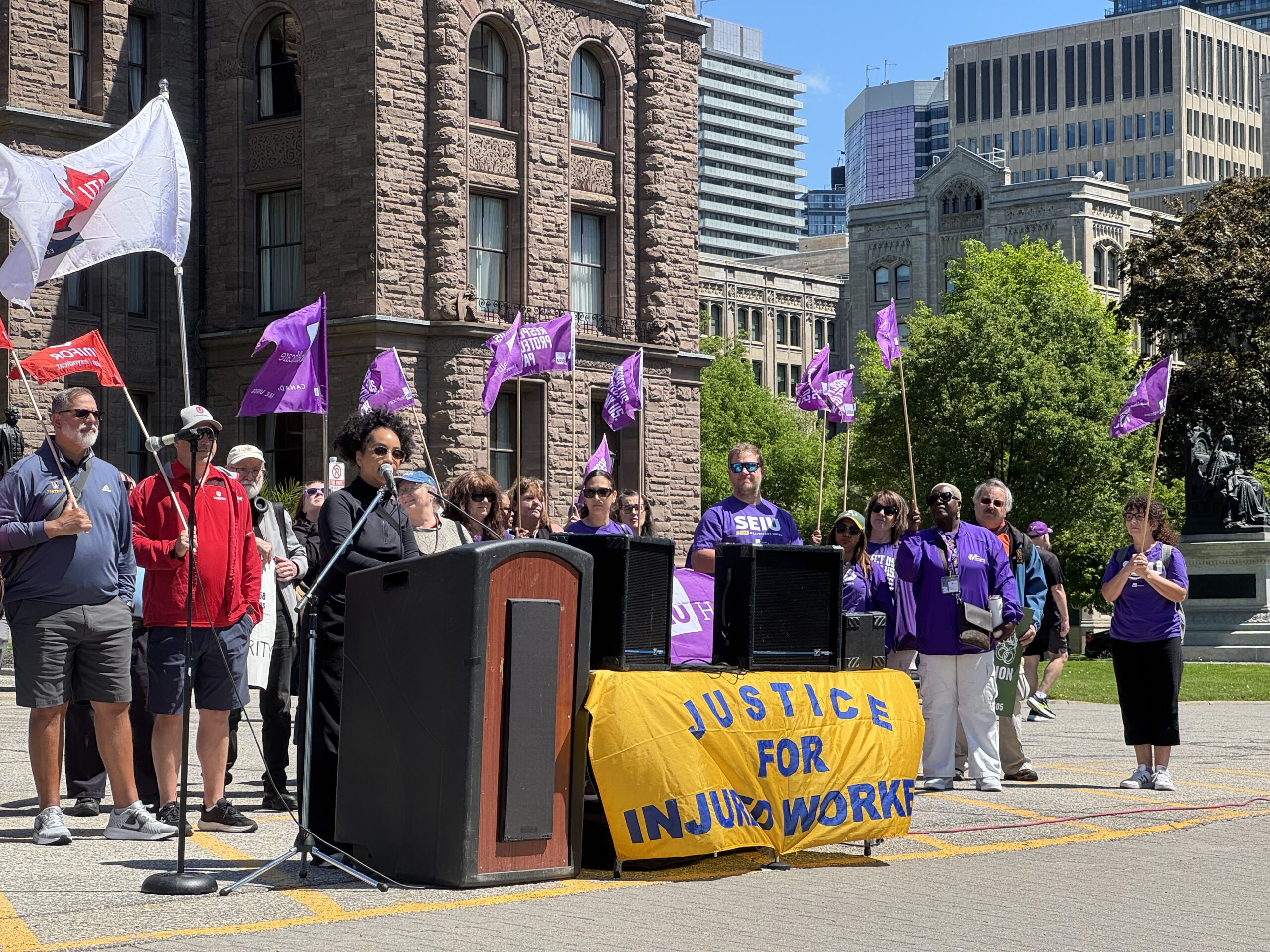
June 1 was Injured Worker Day in parts of Canada. The province of Ontario is home to a vibrant group of injured workers who have defended their rights to treatment and benefits under the Worker Compensation system. They have also advocated and lobbied for improved recognition and rights. No such organized effort is active in the U.S., which is bound to state by state workers compensation laws and state governments engaged in a race to the bottom to minimize worker benefits in order to encourage a more business friendly environment.
While the Ontario system is far from perfect, it’s not surprising that Canada is far ahead of the US: they have universal health care, more governmental support for compensation recipients and dedicated legal resources to assist workers and organizations support workers in need.
On the other hand, advocates in the US are faced with vicious schemes by the insurance industry to reduce, deny and scrutinize injured workers. The toll on workers is unrelenting – poverty, delayed treatment for serious injuries and compromised health and emotional well-being from the battles they face.
The plight of injured workers is very under-researched and reported on in the US. The people who have suffered from unsafe workplaces often are marginalized by their conditions with very little support in communities or the public.
In many cases, union members fare much better in the Worker Comp systems. Unions can often advocate for their membership to secure better terms of care and coverage. Public sector unions such as police, fire and emergency workers are examples of where unions have won better standards of care in both contractual and policy areas.
On the other end of the crapshoot is everyone else. Workers in low wage, immigrant and temporary jobs are plagued by the risk of losing their occupation, physical health and mental stability to an unjust system. Racial injustice has produced a caste system that chooses who gets the most dangerous work in our society. Here are some selected journalism articles that have covered this situation in recent years:
Waiting In Pain: In this article, published in 2018, John Hill describes the problems encountered by injured workers caught in the Hawaii Workers Comp system. The series has six segments, each one describing the different aspects of a failed system. Hill describes the erosion by the greed of insurance companies, corruption of company doctors and a legal system that puts injured workers under investigation for trying to get the treatment they need for recovery.
Inside The Long Retreat of Workers’ Compensation in New York: This article tracks some attempts in New York State to weaken worker protections for proper medical treatment. The issue of denial of medical treatment by Worker Comp insurance is common to most of the US.
How Much Is Your Arm Worth? Depends On Where You Work: “In fact, employers are now paying the lowest rates for workers’ comp than at any time since the 1970s. Nonetheless, dozens of legislatures have changed their workers’ comp laws, often citing the need to compete with neighboring states and be more attractive to business.”
Allowing industry to maim people and allow for unhealthy conditions for cheap is a disincentive to achieving good safety programs.
The current system of treating injured workers like trash at the end of the business cycle must end.
Thanks Peter for highlighting this important aspect of the U.S. workplace safety and health system. Workers comp is surely inadequate and riddled with unfairness but does not get much attention or scrutiny. Worker misclassification and the gig economy are huge issues.
It’s really good to see this being highlighted. The work these Ontario workers are doing is essential for ensuring fair compensation.