
It sounds like one of those detective show plots: Workers suffer serious chemical burns at workplace owned by the world’s richest man. OSHA levies a large penalty for willful violation. Company representative meets with Governor’s office and the citation — as well as a record of the meeting — mysteriously disappears.
But this isn’t a television drama. It’s real life, full of damaged bodies and government corruption at the highest levels — as reported by that well-known socialist rag, Fortune magazine in an investigation by Senior Reporter Jessica Mathews.
Safety Precautions Thrown to the Side
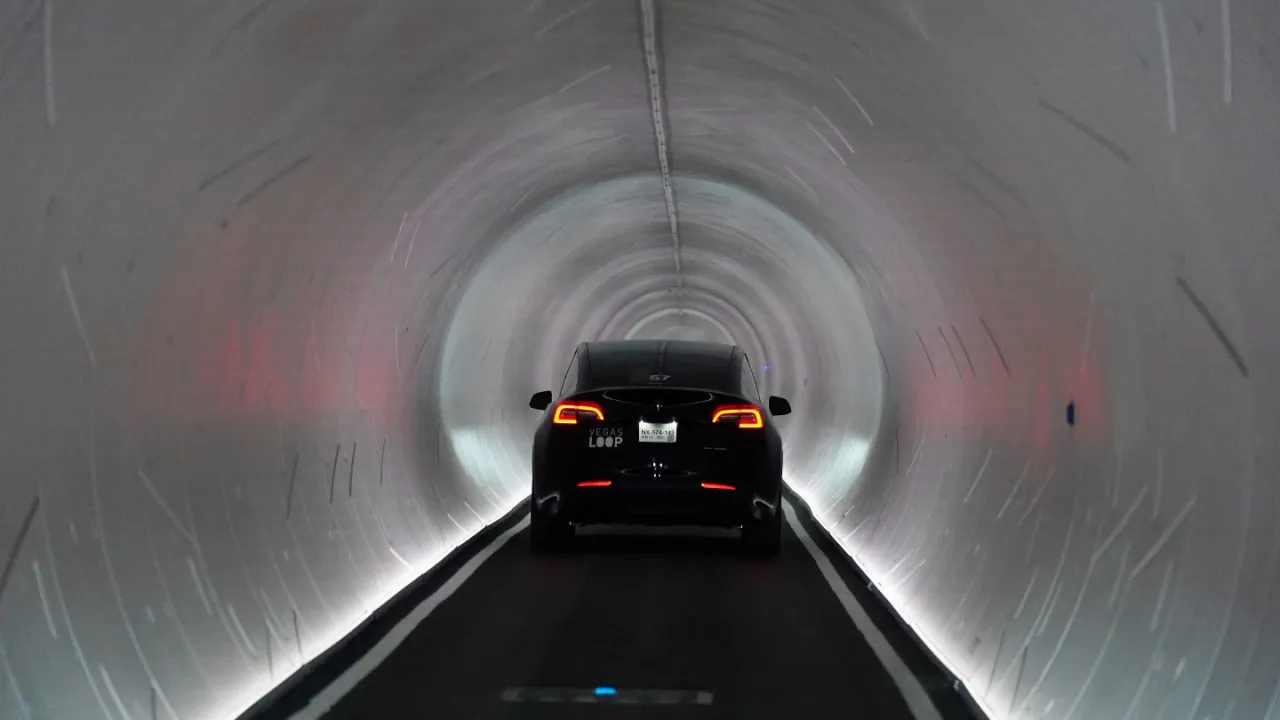
What we’re dealing with here is Elon Musk’s Boring Company.
“Boring” doesn’t refer to Elon’s speeches, but rather to Musk’s vision of a new kind of transportation system: a vast “underground highway” for Teslas to ferry passengers under the streets of Las Vegas, Nashville, and eventually other cities. In Las Vegas, Boring wants to build a “104-station network of underground tunnels connecting the Convention Center to the airport, the Las Vegas Strip, and Allegiant Stadium.”
And that’s not the only major investment Musk has made in the state of Nevada. He also has a $7 billion Tesla Gigafactory, which employs more than 17,000 construction and factory workers.
“I have watched my friends get injured due to the fast pace we’ve been running. I refuse to be the first fatality in this company’s history. No tunnel is worth a single person’s life.”
But digging massive tunnels isn’t easy — involving giant drilling machines, toxic chemicals, and long shifts. And Boring’s management has not been trouble free — especially for workers and the environment. The Fortune investigation found that “safety precautions and environmental permits have seemingly been thrown to the side in favor of speed.”
The safety and environmental problems with Boring aren’t new. A previous Fortune investigation by Mathews found that
Over the course of six months in 2023, Boring reported 36 injuries across its job sites to the Occupational Safety and Health Administration (OSHA), records show. They ranged from heat exhaustion, knee or head contusions, or an elbow or hand being crushed. An OSHA investigation last summer determined that working conditions at Boring’s project site—where it was digging a tunnel from the Las Vegas Convention Center to the Wynn and Encore resort on Las Vegas Boulevard—had exposed its employees to potentially serious injuries or, in some cases, even death. The investigation was sparked by an anonymous tip sent to Nevada’s state OSHA department alleging that 15 to 20 employees had been burned with accelerant chemicals in the tunnels.
And the problems aren’t limited to just Nevada. An employee at the Bastrop, Texas, Boring worksite sent an email the safety manager warning that “I feel that the company as a whole has been very fortunate these past few months that there hasn’t been a fatality…We have consistently flirted with death….“I have watched my friends get injured due to the fast pace we’ve been running,” he wrote. “I refuse to be the first fatality in this company’s history. No tunnel is worth a single person’s life.”
Chemical Burns
A 2023 OSHA investigation had found that in addition to numerous serious safety problems, exposure to chemicals became a repeated problem within the tunnels.
Boring workers would
pump a cement mixture through a hose as grouting—to fill the gaps between the earth and tunnel and secure the structure in place. Each shift, workers would end up pumping between 12,000 to 15,000 liters of a cement mixture through that yellow hose, an employee estimates. The accelerant—the chemical—pumped in is what would harden the cement, and set it. Once that cement mixture and accelerant filled up the space behind the rings, it would spill out, and puddle up with groundwater and dirt at the foot of the boring machine, and employees would have to walk through it to get in and out of the tunnel. Direct exposure to the accelerant could cause rashes or, if left long enough, severe chemical burns. Particularly when mixed with water—or sweat—skin can crack or fissure when exposed.
At least two employees were sprayed directly in the face and eyes with the mixture as they were changing the yellow hose, according to OSHA, which stated it could have led to “caustic chemical burns to the face, or blindness.”
Last December, Las Vegas firefighters launched emergency rescue drills in Boring tunnel networks being built in Las Vegas, Nevada. The toxic muck problem had still not been solved. OSHA reported that three firefighters “said that the muck fluid reached the top of their boots or above, and one of the firefighters who was burned said they had to crawl through it at one point to rescue the dummy, according to the notes. ‘My boots were full of muck,’ they said.” And some of the firefighters said they had not been trained about the toxic effects of the muck.
Although Boring officials claimed the burns suffered by the firefighters were the fault of the fire department, not Boring, OSHA disagreed, issuing three “willful” violations for $425,595 meaning that the company displayed an “intentional and knowing” violation or knew that a hazardous condition existed and made no “reasonable effort” to eliminate it.
Of course, $425,595 was chicken-feed for Musk, but it would have been Nevada OSHA’s third-largest initial penalty since 2015.
And workers continue to get hurt on the job at Boring: A worker’s pelvis was crushed in September, a different employee was shocked by an electrical panel this summer, and “the harsh chemicals that burned the firefighters, part of a toxic muck fluid that pools in the tunnels, remain an ever-present danger for Boring workers, according to five current and former employees at the Boring Company, who spoke on condition of anonymity because they feared retribution. One former employee described how workers would often kneel in the muck, not even realizing they were being burned until it was happening. “They go to peel off their sock,” they said, “And a big old chunk of skin comes off.”
Disappeared
So far so good. OSHA has strict procedures that direct the enforcement process. After OSHA issues citations, the employer can accept the violations and pay the proposed fine; or if the employer disagrees, they have 15 days to reach an “informal settlement” with OSHA — lowering the penalties or amending the citation. If that doesn’t work, the employer can contest the violations and move into the legal process, which can take months or years to resolve.
That’s the normal process. But, of course, Elon Musk is not a normal person. He’s a master of the universe who makes his own rules.
On May 28, hours after Nevada’s workplace safety agency served notice of more than $400,000 in fines to Elon Musk’s $5.6 billion tunneling startup the Boring Company, the phone rang at Nevada governor Joe Lombardo’s office.
Boring Co. president Steve Davis was on the line. Boring Company was challenging citations from Nevada’s workplace safety regulator blaming it for chemical burns two firefighters had suffered in its tunnels during a training exercise.
By the next afternoon, a group of high-ranking state officials, including the governor’s state infrastructure coordinator who took the call, were convened in a room with Davis, who was himself wrapping up a stint in Washington D.C. helping Musk run the Trump administration’s Department of Government Efficiency (DOGE). At the beginning of that meeting, the citations and fines—among the agency’s largest in a decade and a potential threat to Boring’s plans to build tunnels in other U.S. cities—were summarily rescinded.
And the citations and penalties were not the only things that disappeared.
The record of the Governor’s office meeting with Musk’s company was removed from a public document without explanation. More irregularities in the case file occurred: Documents weren’t saved to the file, and a document intended to provide reasoning for revoking the citations was left out.
Nevada OSHA assured Mathews that there was nothing unusual to see here, just “innocuous mistakes,” according to an OSHA spokesperson, claiming that “the citations and fines did not meet legal requirements and should never have been issued in the first place, and that, as a result of this incident, the agency has since updated its policies and procedures to provide more oversight of OSHA investigations into “high-profile” employers.”
Right.
“This level of political involvement in an OSHA investigation is not only highly unusual, but goes against procedure. It’s absolutely not appropriate.” — Jess Lankford, who oversaw Nevada OSHA until 2021.
And as far as the meeting with Boring goes, it’s all perfectly normal, according to Nevada OSHA. Move along. Nothing to see here. All the concern must just be due to Elon Derangement Syndrome, according to a spokesperson:
The Governor’s office “frequently receives complaints and inquiries” from employers and that “it is standard practice” for the Governor’s office to reach out to leadership to assist with complaints and inquiries. She said that the Governor’s office has never directed Nevada agencies to resolve complaints and that, in this instance, it would have supported an agency decision to keep citations if they were “found to have merit and could be validated.”
“This specific outreach from Boring Company is not an anomaly and only stands out due to the high-profile nature of the business because of its affiliation with Elon Musk,” she said.
“Standard practice?”
Yeah, not really, according to lawyers and former Nevada regulators:
This level of political involvement in an OSHA investigation is not only highly unusual, but goes against procedure. It’s absolutely not appropriate,” said Jess Lankford, who oversaw Nevada OSHA until 2021. The agency is supposed to have the political independence to call “balls and strikes” as it sees fit, says Terry Johnson, an adjunct professor at the University of Nevada Las Vegas who previously served as the director of the department that sits above OSHA.
The items removed from the case file, and the failure to mention the meeting with the Governor’s office were also highly irregular. “You have substantial evidence that shows there was, I’m not going to use the word illegal, but there was some questionable practices right there, having that removed,” said Lankford.
And actions like these aren’t just paperwork or procedural deviations; they have a “chilling effect” within Nevada OSHA:
It raises questions about the degree to which a powerful business is able to bend regulatory guardrails to its will and skirt proper oversight, especially as Musk’s consortium of companies become increasingly intertwined with Nevada’s economy.
“There is a defined process, and we didn’t follow it,” says one of the people that worked on the case file. “It wasn’t the agency that decided to do that—it was above the agency,” the person added, speaking on condition of anonymity because they feared retaliation from speaking about internal OSHA matters.
Mathews talked to numerous current and former state officials and labor lawyers. The message was that:
It’s inappropriate for the Governor’s office and political appointees to get involved in a specific OSHA inspection—even one involving a high-profile company. Jess Lankford, the former Nevada OSHA chief administrative officer, said the Governor’s office getting involved is “not the way it’s supposed to work.”
The suspicious actions by the Governor’s office are inhibiting OSHA’s other investigations into Boring injuries as well. “Current Nevada OSHA staff say that the OSHA staffers working on the agency’s ongoing investigations into Boring (one of which involves the crushed worker) are frightened they will ‘get disciplined for doing their job. It’s very political right now.’”
Since Fortune’s inquiries, Nevada OSHA updated the case file “describing a May 29 ‘collaborative meeting w/ employer’ in which Boring Company was told ‘OSHA was withdrawing the citation.’”
Conveniently, the case diary still fails to mention that representatives from the Governor’s office were present at the meeting.
It seems like people are going to have to die…
So has Elon learned his lesson from all of this?
Five current and former Boring employees who spoke with Fortune say the same safety issues persist, with two reporting that chemical burns seem to happen “daily.” When asked to describe safety protocols and training, one employee who left in recent weeks put it simply: “There is none.”
Meanwhile, just in case Elon gets mad again, Nevada OSHA is covering its rear end:
The state has revised its OSHA policies in ways that could ultimately make it more difficult or take longer for the agency to impose such fines on larger employers like the Boring Co. Carreón, the DIR Administrator, said her agency conducted a “quality review process” after the Boring case, and implemented new policies and new procedures. Among them is a mandatory 30-day lawyer review period and notification to the Public Information Officer in “high-profile” or “large-scale employer” cases. The goal, Carreón said, is to improve the quality of Nevada OSHA case files and make sure that what was included in them would be “legally sufficient.”
Right: So “high Profile” and “large scale employers” get special treatment? I mean, there should clearly be “lawyer review” for all big cases or cases involving willful violation. But that review should be taking place all along the process — just just arbitrarily adding another 30 day on to the end. If one were the suspicious type, one might think that that extra period is mainly good to run it by the alleged perps to predict what kind of uncomfortable political fallout the state might expect.
I think we can start referring to that language as the “Musk Clause.”
Now let’s take a moment here. Students of occupational safety and health know that some of the most vocal critics of OSHA tend to focus on the burden that OSHA standards and enforcement put on small businesses, and that small business should be given special benefits lest OSHA requirements and penalties drive mom and pop out of business. OSHA is already required to consider a business’s small size when determining penalties, and OSHA’s Onsite Consultation Program gives small businesses free inspections. But OSHA foes want more benefits for small businesses — even lower penalties, a waiver of first-time violations, and less stringent OSHA standards — or even exemption from compliance with those standards.
Now apparently the state of Nevada says that OSHA should be giving special consideration to large businesses as well. Why? Certainly not because small OSHA penalties will hurt their bottom line. It’s more the stigma of OSHA violations — especially willful violations — that send large businesses into paroxysms of rage. (And make unwanted political trouble for state politicians.) Especially when the companies are owned by Masters of the Universe — like Elon Musk.
And when so many of the state’s jobs are dependent on these “high profile” and “large scale” businesses, there’s the potential job blackmail factor: “Nice economy you got here. Shame if something happened to it.”
Sending a Message
Actions like this send a message — especially to Nevada OSHA staffers:
Two staffers say they were alarmed by the handling of the incident and the speed at which the citations were withdrawn, and that these actions have made agency employees fear inspecting or regulating Boring Co. in the future, particularly because two employees that worked on the Boring Co. investigation were demoted or written up ….One of the people who worked on the case said that they and many colleagues worried that the agency’s ability to independently enforce safe working conditions and accountability had been compromised in order to appease one of Nevada’s (and the world’s) most high-profile business magnates.
Elon, however, is apparently getting a different message: Full speed ahead!
In mid-August, Clark County’s environmental regulators allege, Boring workers refused to stop dumping wastewater down manholes around Las Vegas and later “feigned compliance” and made false statements to inspectors about when the dumping had started, according to documents sent to Boring Company from the Clark County Water Reclamation District. The episode ended up causing “substantial damage” to the broader county infrastructure, and the regulator fined Boring Company nearly $500,000, the documents show.
And for Masters of the Universe like Elon Musk, no punk-ass state agency is going to slow him down:
To date, Boring has never paid a penalty to Nevada OSHA for any safety incidents on its job sites. The company is still contesting eight citations issued in 2023 by Nevada OSHA. As Boring Co. has plowed ahead, Nevada OSHA has been one of the few checks on its practices. But the events of this spring have led some to call into question OSHA’s willingness or ability to wield its own authority.
For those underground, digging the tunnels, a perceived lack of consequence has sent a clear message: “It seems like people are going to have to die, because they won’t make sh*t safe for us,” one current Boring employee says.
Complaints Against State Programs
The Occupational Safety and Health Act of 1970 allowed states to establish their own state OSHA programs, as long as they are “at least as effective as” the federal program. Federal OSHA provides 50% of the state programs’ funding and the feds then oversee the state programs to ensure that their standards and enforcement programs remain “at least as effective.” 21 states (and Puerto Rico) have full state programs, while 6 states have public employee programs where the state covers the public sector and federal OSHA covers the private sector.
If “any interested person or representative of such person or groups of persons” has concerns about the operation of a state OSHA program, they can file a Complaint Against a State Program Administration, or CASPA. Federal OSHA then investigates the complaint, and if problems are identified, the state is ordered to correct those issues.
It is unclear whether a CASPA has been filed in this case.
Both the Obama and Biden administrations received and investigated several CASPAs alleging political interference in the enforcement process.
Nevada OSHA’s Problematic History
Problems with Nevada’s OSHA program are nothing new. In 2007 and 2008, 12 workers were killed in industrial accidents on the Las Vegas Strip during a 19-month period. A series of Pulitzer Prize winning articles by Alexandra Berzon for the Las Vegas Sun revealed Nevada OSHA’s failure to adequately address the hazards workers were facing on the Strip, and found evidence of politically influential builders pressuring the Governor’s office to reduce violations and fines.
Sound familiar?
I was working for the House Education and Labor Committee at that time, and on June 24th, 2008, we held a hearing on the deaths in Las Vegas, the problems with Nevada OSHA, the hazards of construction and OSHA’s lack of resources. Berzon’s series, the Congressional attention and several CASPAs led to some changes in Nevada OSHA, including new leadership. When I was appointed Acting Assistant Secretary at OSHA in April 2009, we immediately launched a “special study” of the Nevada program, identifying numerous problems including their failure to issue willful and repeat violations when the facts justified them, failure to cite many hazards that had been identified, failure to assure that hazards found during inspections were abated by the employer, and failure to adequately train Nevada OSHA inspectors.
Do employees of “high profile” and “large scale” employers have less right to come home alive and healthy at the end of the day than employees of low profile and small scale employers?
That study led to significant improvements in Nevada’s program and enhanced federal oversite of all of the state OSHA programs.
Conclusion: Musk Über Alles?
This scandal raises a number of important issues.
First, is the work of Jessica Mathews and Fortune going to stimulate change in how Nevada’s OSHA program operates? Or will they continue to bend the knee to Elon Musk and other “high profile” and “large scale” employers? Do employees of “high profile” and “large scale” employers have less right to come home alive and healthy at the end of the day than employees of low profile and small scale employers? In a world where Republicans dominate national politics and the governments in many states, an aggressive media — and especially investigative reports like Mathews — may be the only way we see real oversite over the corruption that Donald Trump is leading this country into.
Second, where is Federal OSHA? Has anyone filed a CASPA? If so, how is OSHA responding? Even without an official CASPA, the feds can look into any problems in the state programs or evidence of misconduct. From my experience, there is more than enough evidence in these articles to launch a federal OSHA investigation. How long will it be before Musk’s post-DOGE pressure works not just on smaller state governments, but on the federal government as well?
Finally, as someone once said, the fish rots from the head down. Is the blatant corruption of the Trump administration trickling down to the states? Have we entered an era where corporate influence trumps the rule of law? (OK, it’s always been that way to a certain extent, but these days….) Will we start seeing similar problems in other state OSHA programs — especially those where the CEO’s of “high profile” and “large scale” firms like Elon Musk exert their power over pliant government officials and the rule of law?
If the mission of Fortune is “to change the world by making business better,” it seems that mission of Elon Musk is to change business to make the world worse.
Workers walk off Nashville Boring Company tunnel project amid safety and pay disputes
www.newschannel5.com/news/workers-walk-off-nashville-boring-company-tunnel-project-amid-safety-and-pay-disputes